
Preventable Disruptions The Result in Failed Business
Preventable Disruptions The Result in Failed Business
At the Business Networking Breakfast presented by ServiceMaster, one message came through loud and clear: most business owners do not get taken out by dramatic disasters first. They get taken out by small, preventable disruptions they assumed would somehow work themselves out.
The internet goes down. A payment system stops working. The one employee who knows the process is out sick. A password is missing. A schedule gets confused. None of those sound catastrophic on their own. But if a business is not prepared, the real cost shows up in the aftermath through lost time, lost revenue, stressed employees, and shaken customer trust.
That is the heart of the problem. When Tuesday gets wonky, what happens next?
Small problems are rarely small once they hit operations
Most business interruptions do not begin as a full-blown crisis. They begin as a small snag that lands at exactly the wrong time.
That is why the most expensive part is often not the disruption itself. It is everything that follows when no one is ready for it. An outage that should have been manageable turns into eight, ten, or twelve hours of confusion because nobody knows who covers it, where the information lives, or what needs to happen first.
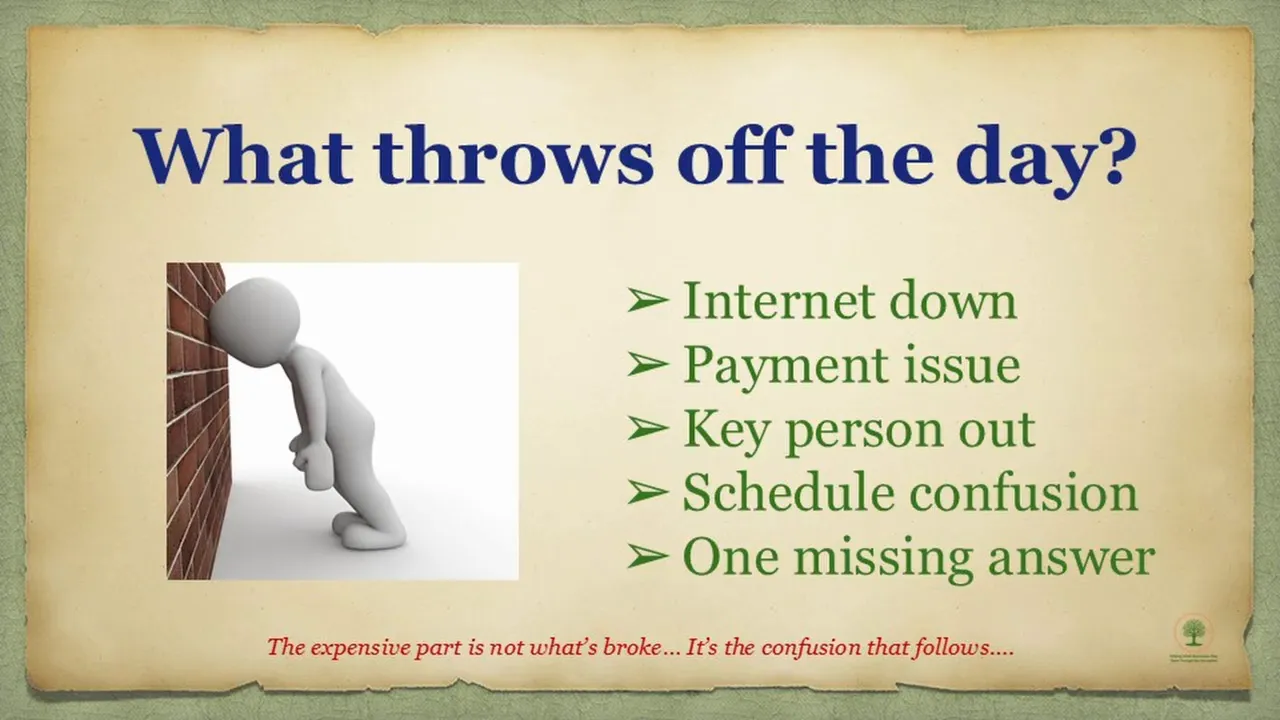
Those moments feel familiar in almost every industry:
- Internet down
- Payment issue
- Key person out
- Schedule confusion
- One missing answer
Whether the business is in professional services, banking, insurance, healthcare, trades, or retail, the same operational questions keep coming back.
The four assumptions that quietly cost businesses time, money, and trust
A lot of businesses operate on assumptions that feel safe right up until they are tested. The trouble is, assumptions are not plans.
1. “Someone will cover it”
This is one of the most common traps in business continuity. A task, system, or relationship is left in the hands of one trusted person, and everybody else assumes that if anything goes wrong, that person will handle it.
But what happens when that person is unavailable?
If they are sick, out of town, unreachable, or no longer with the company, the business suddenly discovers just how much was sitting in one person’s head, inbox, desk drawer, or phone.
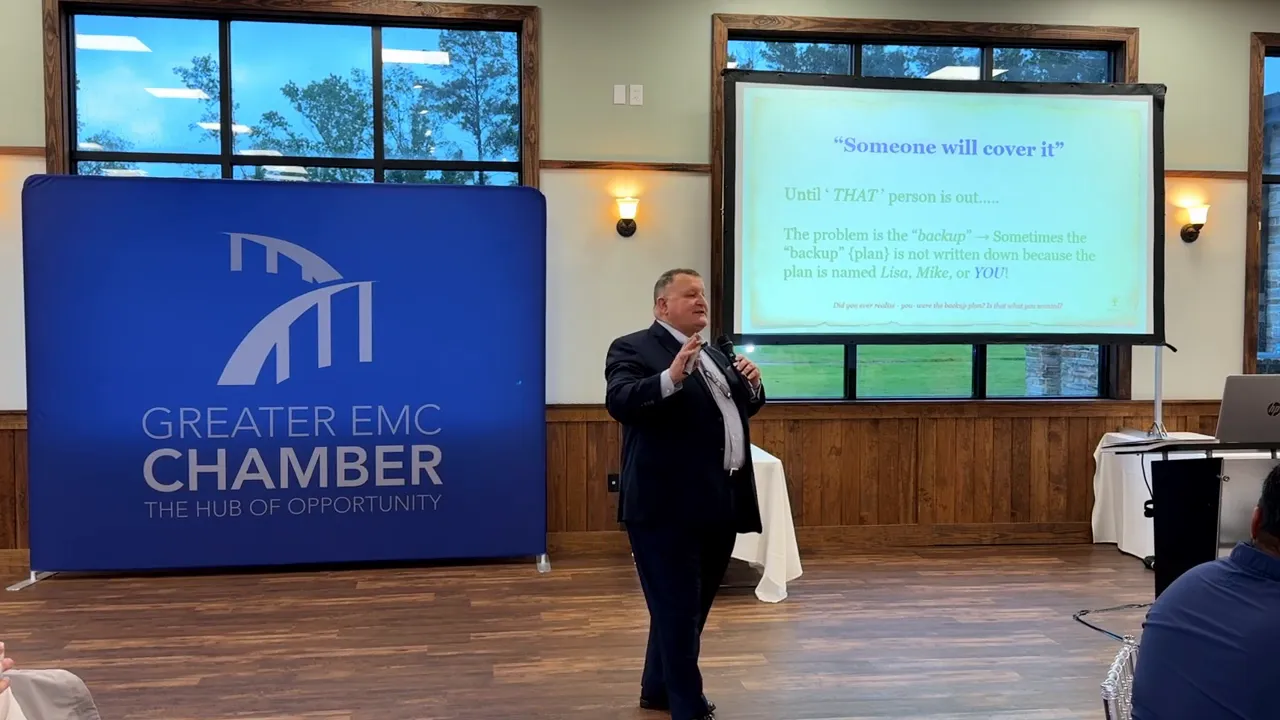
Even businesses that say they have a backup plan often discover something uncomfortable when they are asked one simple question: Have they ever actually tried it?
Having a backup on paper is not the same as validating that it works. Ten minutes of testing can reveal gaps that would cost far more later.
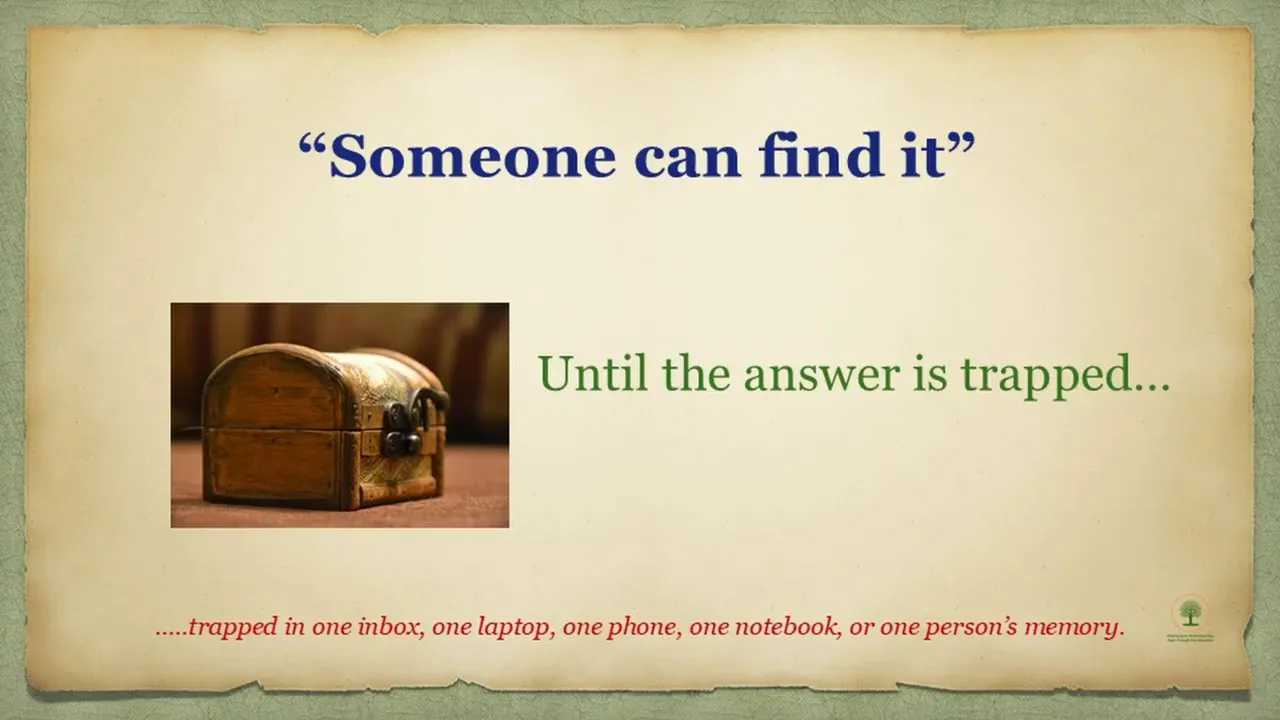
2. “Someone can find it”
This assumption sounds harmless until the answer is trapped.
Maybe the password is on a sticky note under a keyboard. Maybe the login is saved in one employee’s browser. Maybe the vendor contact is in somebody’s wallet, personal phone, or email history. Maybe the file exists, but nobody knows exactly where.
In normal conditions, that kind of informal system limps along. In a stressful moment, it falls apart fast.
And stress matters here. When anxiety spikes, people do not think clearly. They scramble. They improvise. They forget obvious things. That is exactly why access has to be settled before the disruption happens.
3. “Someone knows what to do first”
This is where confusion gets expensive.
If the owner steps away for a couple of hours and something breaks, does the team know what happens first? Or do five people start solving the same problem five different ways?
Without clarity, well-meaning employees can create even more cost. Work gets duplicated. Customers get mixed messages. The wrong issue gets prioritized. Time goes to noise instead of action.
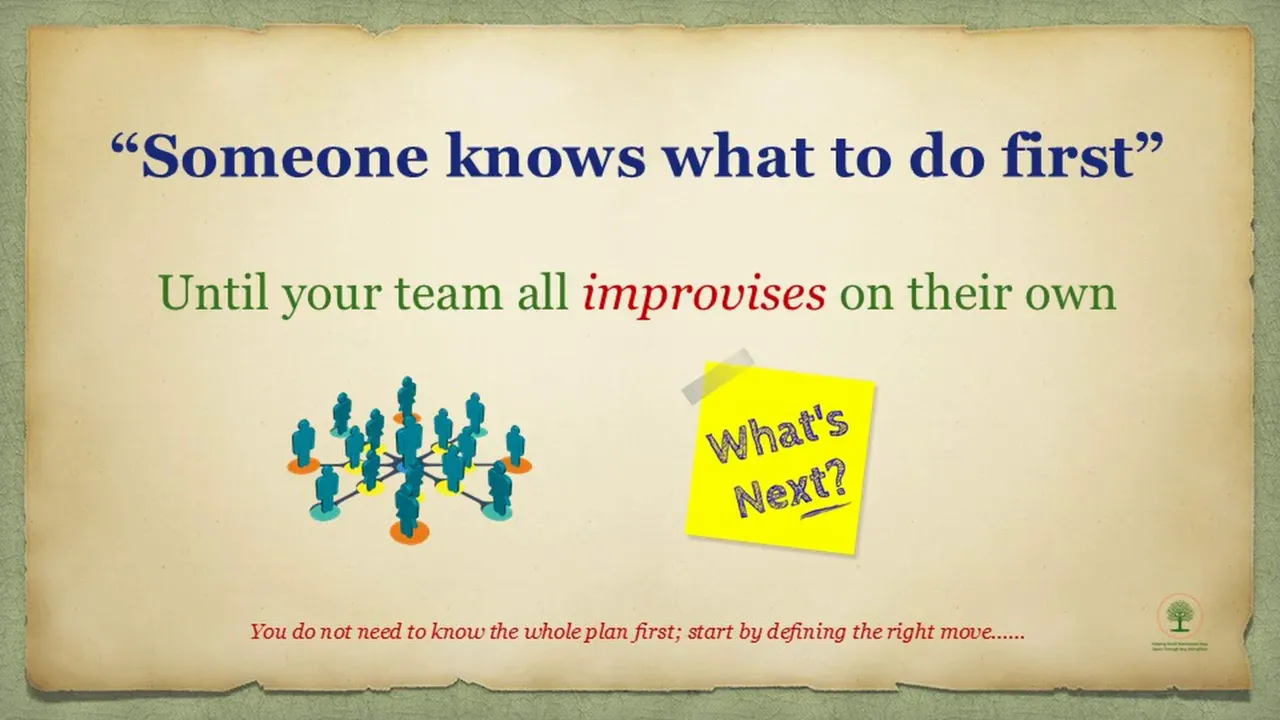
That does not mean every business needs a 500-page emergency binder. It means the business needs enough structure for people to answer a few basic questions quickly and consistently.
4. “Someone knows what matters most”
In the middle of a disruption, everything can feel urgent.
That is why priorities have to be defined in advance. A team needs to know what absolutely must keep moving and what can wait. Sometimes the smartest decision is not identifying only the A-priority work. It is also knowing what is a B and can pause for a bit without causing damage.
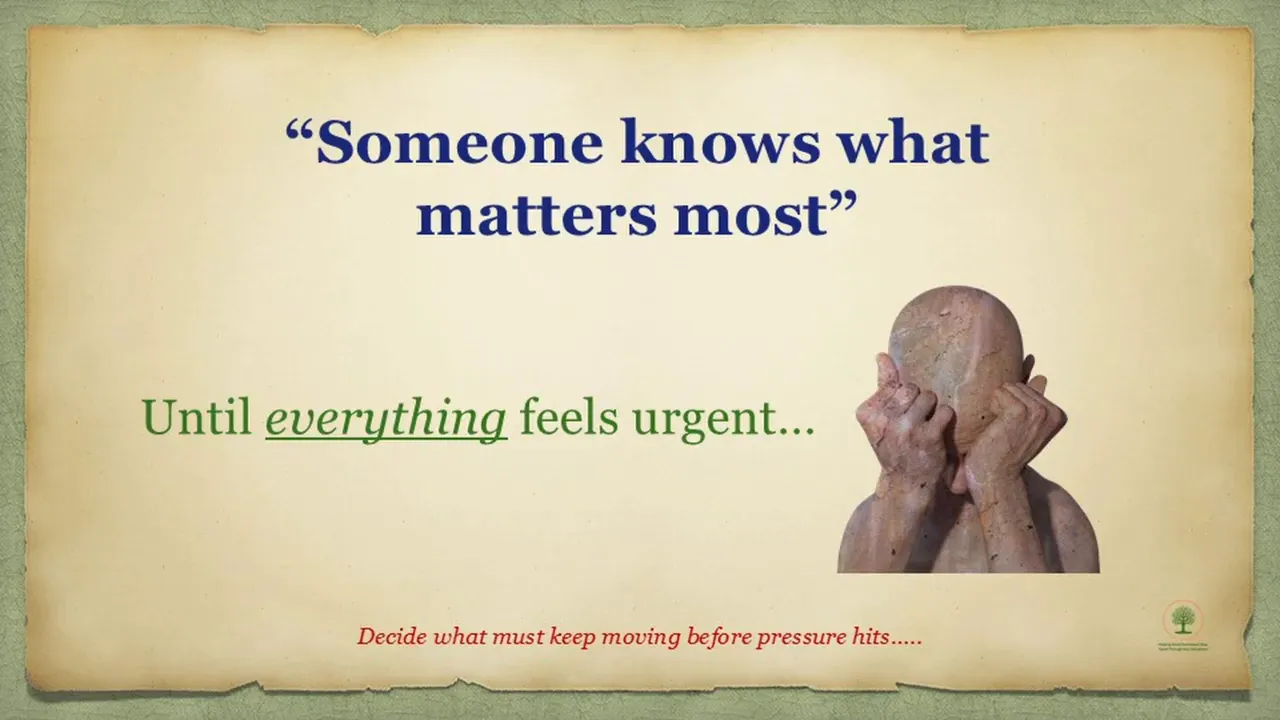
When nobody knows what matters most, the business burns time and energy on the wrong things.
The four questions every business should answer before the day gets expensive
Across industries, the same four questions show up again and again. These are the questions that separate a manageable interruption from a messy one:
- Who covers it?
- Who can reach it?
- What happens first?
- What must keep moving?
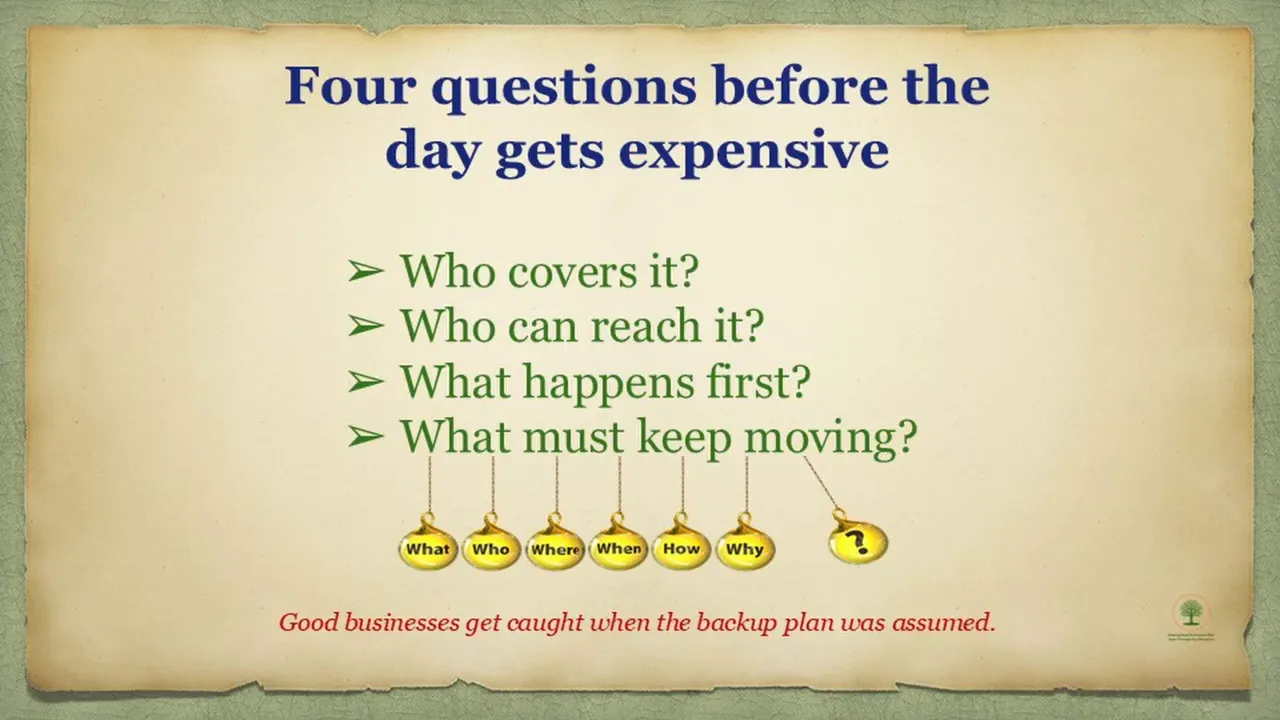
These are not just emergency management questions. They are business protection questions.
Every owner should be able to identify the key functions that keep the company running, who handles them, what decisions they are allowed to make, and why those actions matter. If people do not understand the why, they are less likely to produce the right result under pressure.
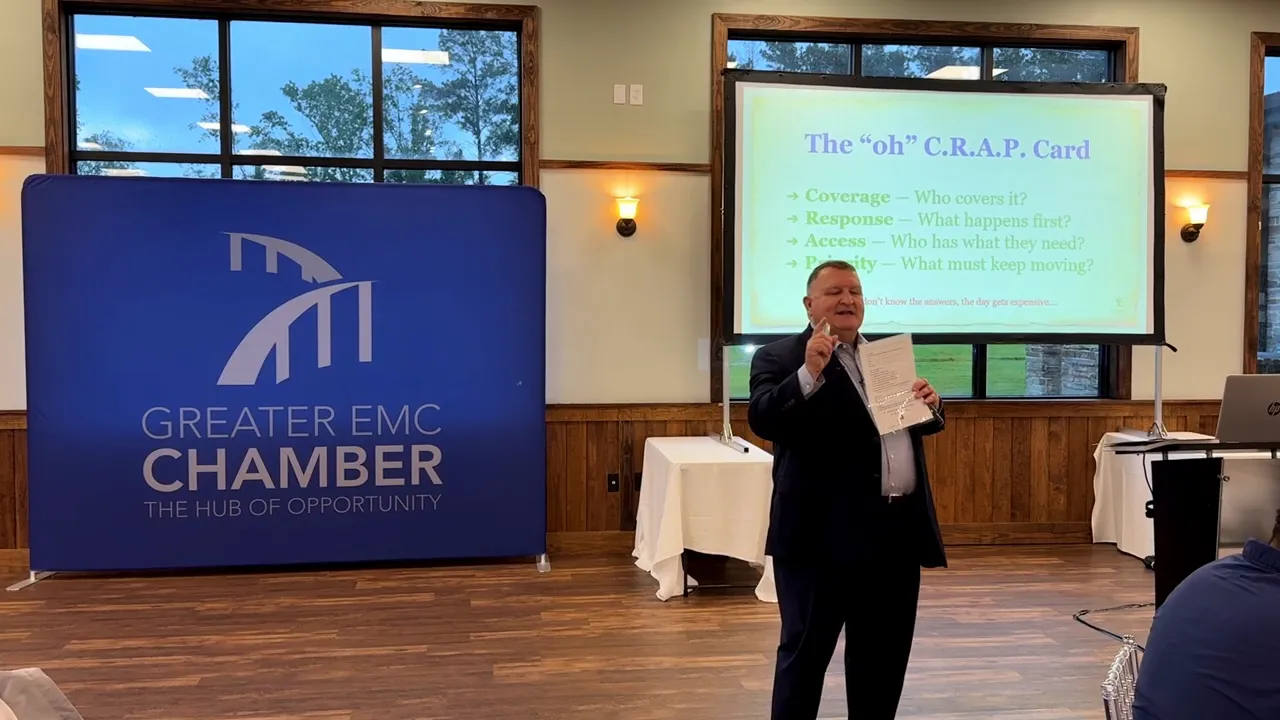
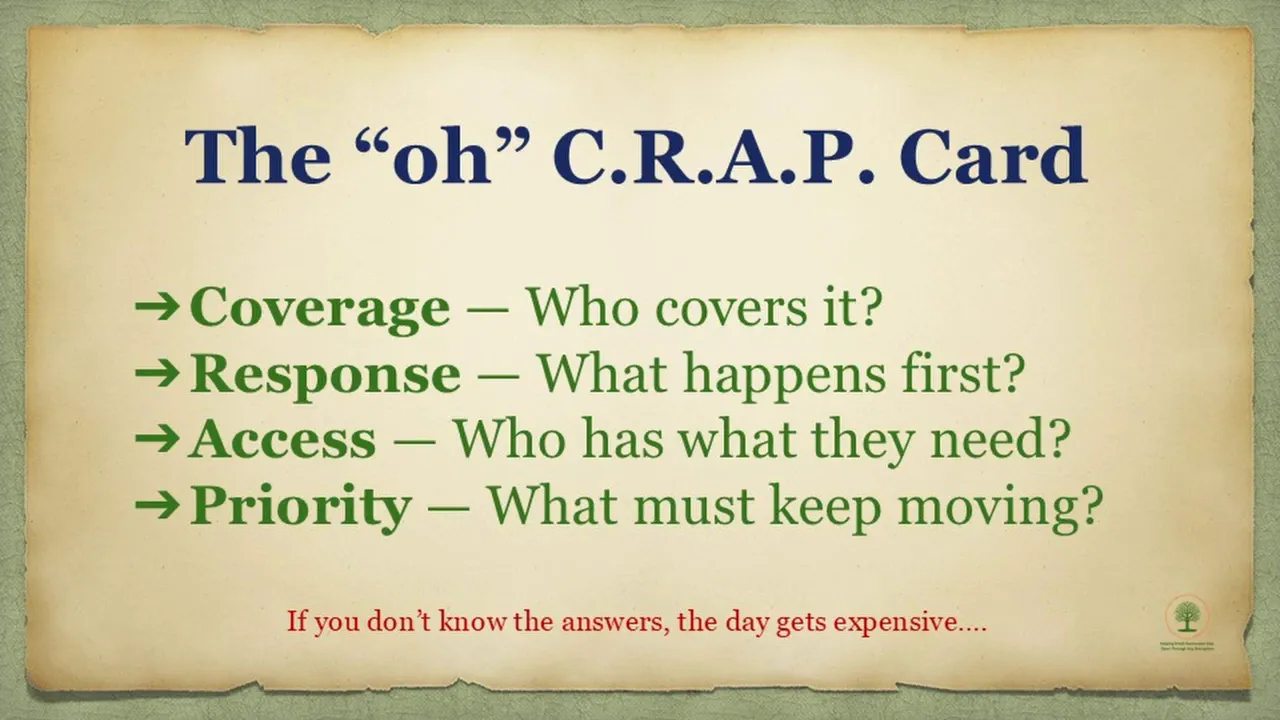
A practical tool: the “Oh C.R.A.P. Card”
To make this easier and more usable, the framework shared at the breakfast was the Oh C.R.A.P. Card. The name gets a laugh, but the idea is serious and useful.
C.R.A.P. stands for:
- Coverage
- Response
- Access
- Priority
Coverage
Who covers what?
This is about identifying critical roles, the primary person responsible, the backup person, and the kinds of decisions they are authorized to make. If a backup is named but cannot actually function as a backup, that gap needs to be fixed now, not during an outage.
Response
What happens when normal work is interrupted?
This includes deciding how long a problem can continue before action is triggered and who is responsible for taking that first step. Response time matters because small delays turn into larger operational failures very quickly.
Access
Does the backup have what they need?
It is not enough to say, “You are the backup.” The backup needs passwords, systems access, vendor contacts, process instructions, and enough practical knowledge to step in. Otherwise the title of backup means nothing.
Priority
What must keep moving?
Revenue, service, communication, customer flow, and patient flow were all highlighted as examples of things businesses may need to protect first. At the same time, teams should identify what can wait so they are not treating every interruption like a five-alarm fire.
Why this only takes ten minutes, but can save much more
One of the strongest points made was that this does not need to be complicated.
A business does not need a giant continuity manual before it can improve. It can start with a single ten-minute exercise. Sit down with one employee and walk through the card. Then do it again with another employee. Compare the answers.
If different people give very different answers about who covers key work, where critical information is stored, or what should happen first, that is useful information. It means the weak spot has been exposed before it caused damage.
That kind of quick internal check is simple, but it is also honest. It reveals whether the business is operating on a shared system or on a collection of private assumptions.
Business continuity matters even more heading into hurricane season
Because the talk also came from an emergency management background, the conversation naturally tied into hurricane season. June 1 marks the start, and that makes preparedness more than a theoretical exercise for small businesses.
The same continuity thinking applies here too. Before a storm is approaching, businesses should review a few practical areas:
- Insurance coverage so there are no surprises later
- Critical vendors and the contacts needed to reach them
- Key systems including IT and financial systems
- Records and cash flow so operations and payments can continue
- Business relationships that can help during disruption and recovery
The point is not to build fear. The point is to reduce scramble. A business that knows its coverage, systems, contacts, and cash flow dependencies has a much better chance of staying functional when conditions get rough.
Preparation is not pessimism. It is protection.
There is a reason this subject can feel taboo. Many owners do not like talking about what happens when things go wrong. It can feel negative, or it can feel like tempting fate.
But avoiding the conversation does not eliminate the risk. It only increases the chance that a preventable problem becomes a costly one.
Preparation protects more than operations. It protects trust. Customers notice when a business stays steady during disruption. Employees notice when expectations are clear. Owners notice when one bad Tuesday does not turn into one very expensive week.
One clear first move now prevents an expensive scramble later
The practical takeaway is refreshingly simple: pick one function in the business and test it.
Ask:
- Who covers it?
- Who can access what is needed?
- What happens first if it breaks?
- What absolutely must continue?
Then ask somebody else the same questions.
If the answers line up, that is progress. If they do not, that is the kind of warning a smart business wants while there is still time to fix it cheaply.
Unexpected challenges are part of business. Being unprepared for them does not have to be.